

FAMILYPSYCH
Familia y bienestar.

Studies indicate that there are many variables that are key to preventing difficulties within families, such as family meals, quality time spent together by parents and children, effective emotional regulation, improved communication and family cohesion, and a healthy work–life balance. All these aspects can be studied in different settings where families participate, from the home and immediate environment to school and leisure activities such as sport. These factors, among many others, act as protective factors against the emergence of potential problems and risks to the well-being and adjustment of children—especially adolescents—and other family members, regardless of family type. Therefore, if you would like to collaborate on our projects and learn more about families’ ability to prevent these difficulties and promote the well-being of all their members, GET INVOLVED.
This line of research aims to advance our understanding of the following areas:
- Protective factors that promote the psychological and emotional well-being of families and all their members, particularly children.
- The impact of leisure activities (such as sport or children’s and young people’s leisure groups) and self-care (such as mindfulness techniques for parents or teachers) in promoting healthier and more satisfying family relationships.
- Analysis of contextual factors influencing family functioning, such as work-life balance.
Programmes.
SMART FAMILY COEXISTENCE based on positive parenting and good treatment
El proyecto CONVIVENCIA FAMILIAR INTELIGENTE tiene como fin investigar una metodología de intervención con familias centrada en la parentalidad positiva, junto con la construcción y validación de diferentes instrumentos de medida de esa convivencia familiar. Se pretende encontrar evidencia empírica de la efectividad de esta metodología en el desarrollo de buenas prácticas educativas familiares y en la reducción de conflictos en las familias, contribuyendo de esta forma al desarrollo psicosocial adecuado de niños, niñas y adolescentes. El equipo Deusto FamilyPsych colabora en la primera fase, es decir, en la validación de instrumentos evaluativos de la convivencia. Con este fin se ha generado un acuerdo entre el autor de los instrumentos y el programa original “Familias inteligentes” (Antonio Ortuño), La ONG Acción Familiar Euskadi y Deusto FamilyPsych, en la cual la colaboración de Habilmind (plataforma online, centrada en la evaluación de los aspectos que influyen en el aprendizaje) es fundamental en el análisis cuantitativo.
INTEMO Emotional Intelligence Programme in leisure contexts for children aged 8 to 12 and their families
In recent years, social and educational professionals have increasingly highlighted the need to work on children’s emotional development. This emphasis is supported by evidence demonstrating the significant protective value of emotional intelligence in preventing the emergence of developmental problems during childhood, as well as its key role in promoting children’s well-being. Research findings show that individuals with higher emotional intelligence tend to exhibit better academic performance, more prosocial behaviour, improved peer adjustment and greater overall well-being. Furthermore, this impact is not only immediate during childhood, but also lays the foundations for healthier functioning in adolescence and adulthood. At the University of Deusto, the Portugalete Leisure Network and the Lagungo Family Guidance Centre, we consider the leisure context to be a highly valuable setting for implementing an emotional development programme for children, as it offers opportunities to work in a more flexible, intensive and dynamic way through play, values education, outdoor activities, and similar approaches. Moreover, emotions are not individual or isolated processes; they emerge within a context, and the family plays a central role in emotional work at home by encouraging expression, supporting regulation, and facilitating management of emotions. For this reason, the programme includes a series of meetings with the parents of children participating in the leisure groups.
Projects.
Work-life balance and its impact on parenting: Risk and protective factors in today’s families
Lana eta familia bateratzeak gurasotasunean duen eragina: Arrisku eta babes faktoreak egungo familietan
Active involvement by each parent in their children’s daily life has positive effects on their well-being. However, conflict in the work–family dynamic can have a negative impact on family functioning and the emotional climate at home, affecting parenting.
Currently, in most households both parents are employed. Advancing the understanding of how work experiences affect parenting practices may serve as a basis for designing interventions aimed at improving the working conditions of parents with dependent children, which in turn will foster a greater number of protective family dynamics.
This is the final aim of the research project “Work–family balance and its impact on parenting”, currently being developed by the Deusto FamilyPsych research team from the Faculty of Psychology and Education at the University of Deusto, with the support of the Directorate of Family and Childhood (Department of Equality, Justice and Social Policies of the Basque Government), through educational centres.
Psychosocial and psychoeducational support programme for families and students in educational centres in the municipality of Barakaldo on the aftermath of COVID-19 and lockdowns
Your Subtitle Goes Here
The programme focuses on a psychosocial and psychoeducational support intervention aimed at promoting the healthy emotional development of students and their families, as well as teachers in educational centres in Barakaldo, within a post-pandemic context. It seeks to evaluate the effectiveness of this systemic and community-based intervention, facilitating the personal adjustment of children, adolescents and young people in both school and family settings. In addition, it is conceived as a network-based intervention within the educational system, involving collaboration with school professionals (mainly teachers, counsellors and educational advisors). It also adopts a preventive approach, aimed at developing emotional self-care skills among teachers and families, as well as emotional regulation and management competencies among students. Ultimately, the programme seeks to improve classroom and school climate, thereby fostering better academic performance.
Other projects.
Smart family life based on positive parenting and good treatment
Ana Martinez-Pampliega, Susana Cormenzana, Laura Merino and Paula Coello, together with Antonio Ortuño and AFAE
Bizkailab – Identification, design and evaluation. Evaluation of a programme aimed at strengthening the bond between children and carers
Ana Martinez-Pampliega, Leire Iriarte, Susana Corral, Leire Gordo, Susana Cormenzana, Laura Merino
Family functioning, cultural values, psychological well-being
Ana Martinez-Pampliega
The role of grandparents in children's symptoms in situations of interparental conflict
Tamara Prieto, Leire Iriarte and Ana Martínez-Pampliega
Parenting, emotional regulation and mood as mediating mechanisms between parental conflict and adolescent adjustment
Susana Cormenzana and Ana Martínez-Pampliega
Generalisation of interparental conflict within the family context and its relationship with children's aggressive and antisocial behaviour
Laura Merino and Ana Martínez-Pampliega
Resources.
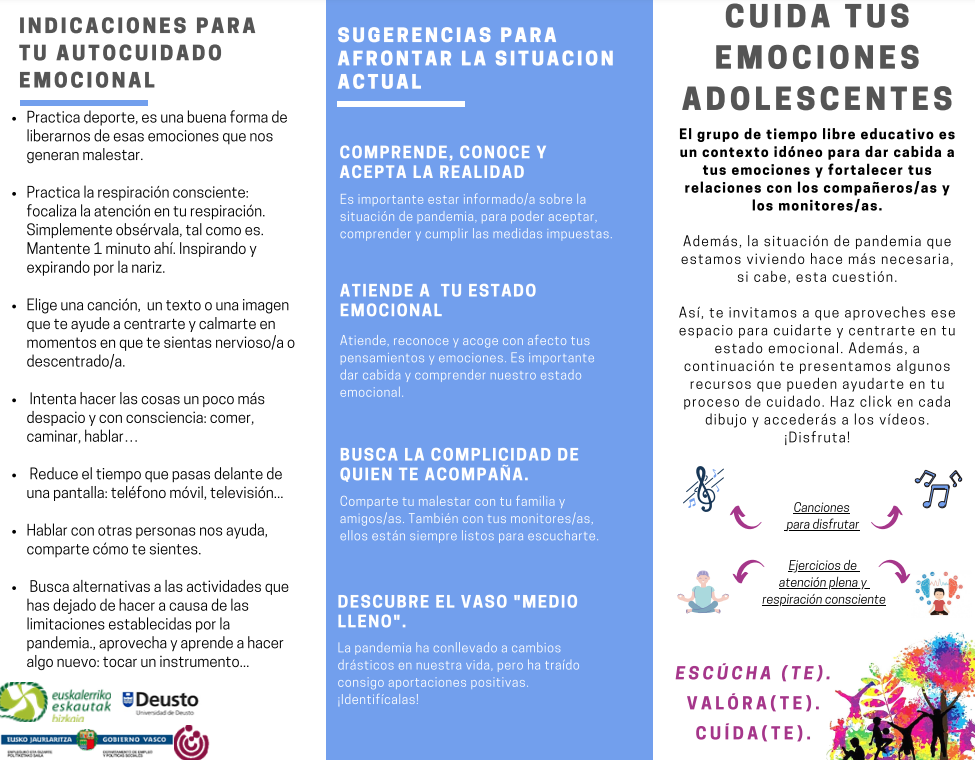
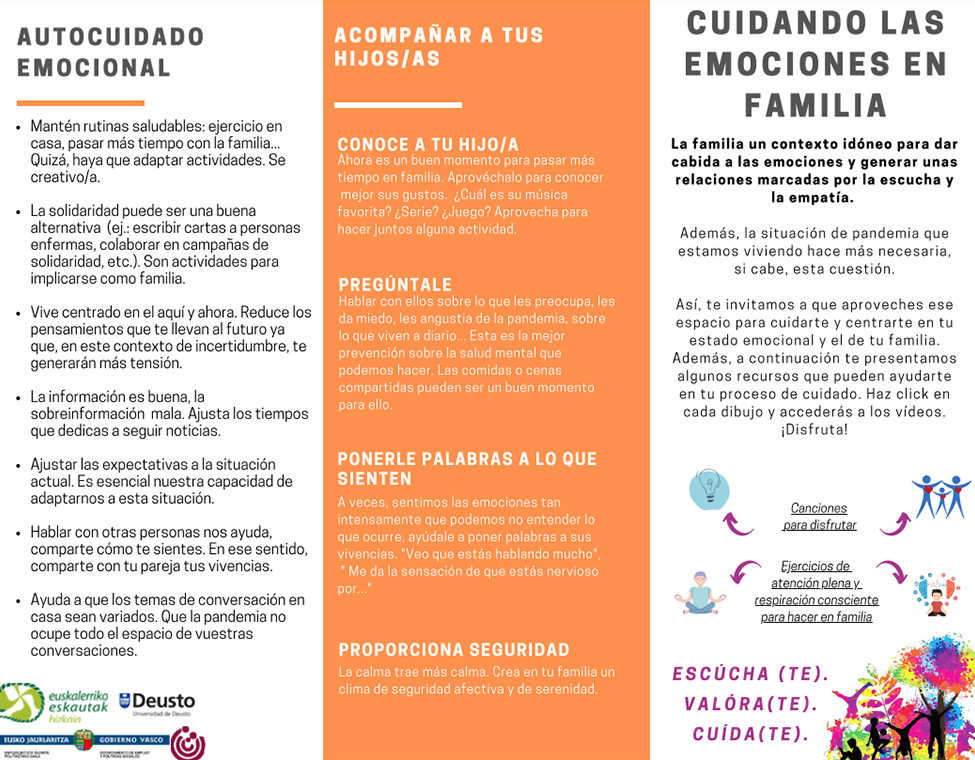
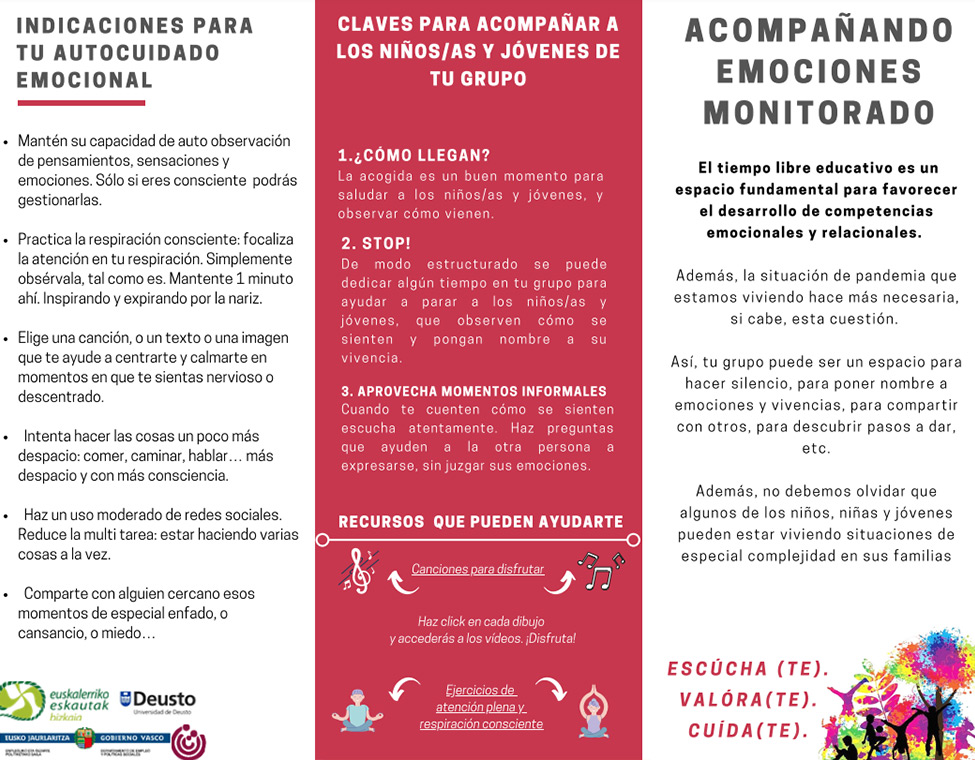
Autocuidado Emocional. Desde el Centro Familiar Lagungo y Deusto FamilyPsych, dentro del Programa Inteligencia Emocional en contexto de tiempo libre educativo en colaboración con Euskalerriko Eskautak Bizkaia se han elaborado estos trípticos con algunos consejos prácticos y claves para la gestión emocional en tiempos de pandemia tanto para chavales, como monitorado y familias. La situación de la pandemia por COVID-19 ha hecho surgir la necesidad de establecer medidas de distanciamiento social y aislamiento para evitar los contagios y garantizar la salud de las personas. Sin embargo, hay ámbitos, como el tiempo libre educativo, que ante estas restricciones han tenido que adaptar su actividad. El objetivo de estos trípticos es dar respuesta a las necesidades emocionales tanto de los niños/as y jóvenes que participan en Euskalerriko Eskautak Bizkaia, como de sus familias y los monitores que les acompañan.
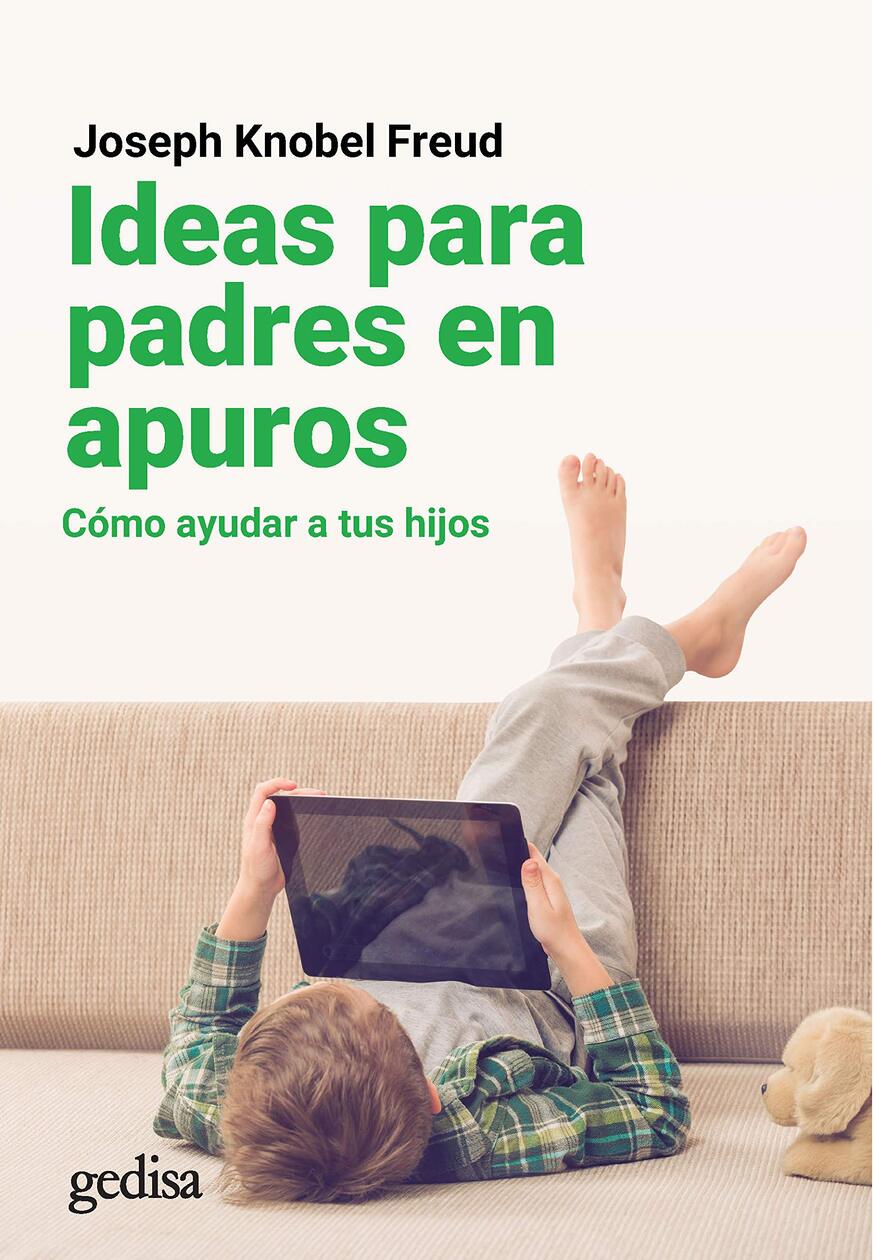
Ideas for parents in a bind
Tantrums. Mealtimes. Boredom. Video games. In this book, psychoanalyst Joseph Knobel Freud, drawing on his extensive experience as a therapist, addresses the main challenges faced by parents today: some seemingly practical, such as establishing healthy sleep habits, and others more complex or concerning, such as abuse, bullying, or changes within the family unit. Many of the answers to these questions are often already held by parents themselves. This book offers a much-needed reflection and update. Despite the variety of topics covered, the author provides insights into personal development and emotional well-being throughout the entire book. Knobel conveys a vision that we invite all parents, educators and professionals to explore.
Other resources.
Bizkailab – Identification, design and evaluation. Evaluation of a programme aimed at strengthening the bond between children and carers
Ana Martinez-Pampliega, Leire Iriarte, Susana Corral, Leire Gordo, Susana Cormenzana, Laura Merino
Family functioning, cultural values, psychological well-being
Ana Martinez-Pampliega
The role of grandparents in children's symptoms in situations of interparental conflict
Tamara Prieto, Leire Iriarte and Ana Martínez-Pampliega
Parenting, emotional regulation and mood as mediating mechanisms between parental conflict and adolescent adjustment
Susana Cormenzana and Ana Martínez-Pampliega
Generalisation of interparental conflict within the family context and its relationship with children's aggressive and antisocial behaviour
Laura Merino and Ana Martínez-Pampliega
Participate
Mindful parenting
From the Deusto FamilyPsych research team at the University of Deusto, we are conducting a study on conscious parenting through the practice of mindfulness.
The aim of this research is to investigate the benefits of mindfulness in parenting.
Mindfulness is defined as the ability to pay full attention to the present moment. It involves an attitude of acceptance and non-judgement towards one’s experience. The practice of mindfulness allows parents to be more fully present in their relationship with their children and, in this way, to detect and respond to relational needs as they arise moment by moment. When parents are present, the bond between them and their children is strengthened.
Mindfulness is a tool that promotes not only attentiveness to the changing needs of children as they develop, but also parental self-care, fostering a more compassionate and mindful approach to the relationship.
All parents with at least one child aged between 1 and 18 are welcome to contribute to the study.
TAKE PART in the research via the link below and help us spread the word!